Home / Guides / How many reps?
Blitz Gym SS15 · Guide

How many reps should you do for strength or muscle?

Match your reps to your goal. For maximal strength, lift heavy for about 1–6 reps and rest 2–5 minutes. For muscle growth, anything from about 6 to 30 reps works if each set ends close to failure. For muscular endurance, go lighter for 15+ reps with shorter rests. How hard each set is matters more than the exact number.

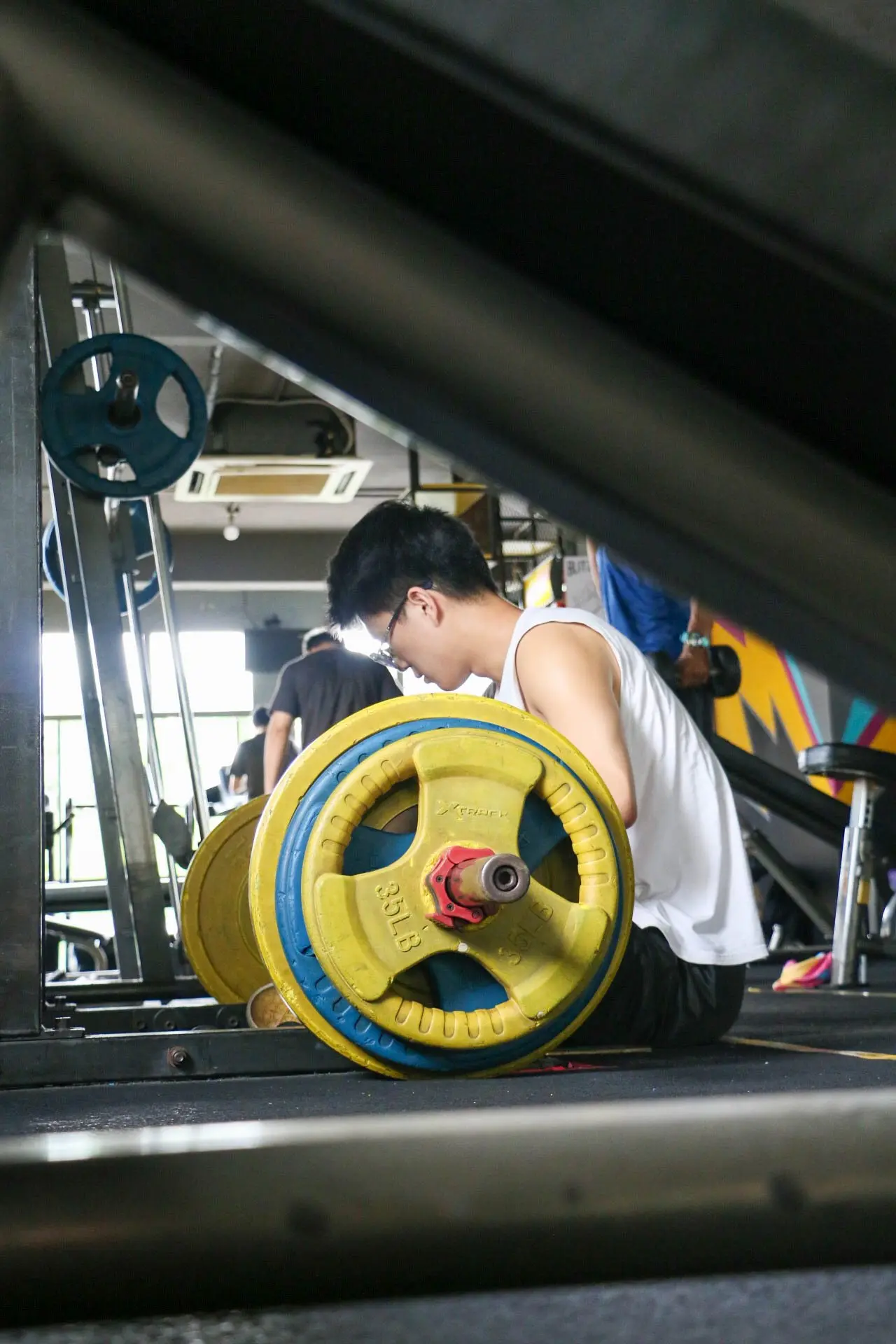
Close-up of weight plates on the training floor at Blitz Gym SS15

Why 3 sets of 10 is not magic

The classic idea is the "repetition continuum": heavy and low reps for strength, moderate reps for size, light and high reps for endurance. A 2021 review of the research found the picture is looser than that. Heavy loads are still best for maximal strength, but muscle growth happens across a wide range of loads as long as the effort is high.

Strength: about 1–6 reps

If your goal is a bigger squat, bench or deadlift, most of your work on those lifts should be heavy, in roughly the 1–6 rep range. Rest long enough to lift the weight well again: 2–5 minutes on big lifts. In a study of trained lifters, resting 3 minutes between sets produced more strength and muscle than resting 1 minute.

Muscle growth: about 6–30 reps, close to failure

For size, the number on the plate matters less than how close you take the set to failure. Sets of 6, 12 or 25 can all build muscle if they end near your limit. Very high-rep sets are more painful and slower, so most people do the bulk of their hypertrophy work at around 6–15 reps and use higher reps for smaller muscles and isolation exercises.

Endurance: 15+ reps

To get better at doing many reps, train with lighter loads for 15 or more reps with shorter rests.

The part most people miss: reps in reserve (RIR)

RIR is how many good reps you had left when you stopped. Ending most sets with about 1–3 reps in reserve is a good default. Going all the way to failure on every set is not clearly better for muscle growth and costs a lot more fatigue. But stopping when you could have done 10 more is too easy: that set did very little.

How many sets a week?

About 10 hard sets per muscle group per week is a solid starting point for growth. A meta-analysis found that doing 10 or more weekly sets per muscle produced more growth than doing fewer. Start there, then add sets if you are recovering well and progress stalls.

Putting it together

Example leg session
ExerciseSets × repsGoal
Squat4 × 4–6, rest 3 minStrength
Leg press3 × 8–12, 1–2 RIRMuscle
Leg extension3 × 15–20, last set close to failureMuscle

Frequently asked questions

Is 3 sets of 10 good for building muscle?

It can work, but there is nothing special about it. Anything from about 6 to 30 reps builds muscle if each set ends close to failure.

How many reps should I do for strength?

For maximal strength, do most of your work on the main lifts with heavy weights for about 1–6 reps, resting 2–5 minutes between sets.

Do I need to train to failure to build muscle?

No. Ending most sets with about 1–3 reps in reserve is a good default. Training to failure on every set is not clearly better and causes more fatigue.

How many sets per week should I do to build muscle?

About 10 hard sets per muscle group per week is a solid starting point. Add sets if you recover well and progress stalls.

How long should I rest between sets?

Rest 2–5 minutes on heavy compound lifts. In one study of trained lifters, 3-minute rests produced more strength and muscle than 1-minute rests.

Sources

  1. Schoenfeld BJ et al. (2021). Loading recommendations for muscle strength, hypertrophy, and local endurance: a re-examination of the repetition continuum. Sports 9(2):32.
  2. Refalo MC et al. (2023). Influence of resistance training proximity-to-failure on skeletal muscle hypertrophy: a systematic review with meta-analysis. Sports Med 53:649–665.
  3. Schoenfeld BJ, Ogborn D, Krieger JW (2017). Dose-response relationship between weekly resistance training volume and increases in muscle mass: a systematic review and meta-analysis. J Sports Sci 35(11):1073–1082.
  4. Schoenfeld BJ et al. (2016). Longer interset rest periods enhance muscle strength and hypertrophy in resistance-trained men. J Strength Cond Res 30(7):1805–1812.

General information for healthy adults, not medical advice. If you have a medical condition, check with your doctor before changing how you train or eat.

Train it at Blitz Gym SS15

Not sure where to start with your programme? Ask our coaches on the floor, or book personal training to get a plan built around your goal.